This post contains affiliate links. If you purchase through them, I may earn a small commission at no extra cost to you. Thank you for supporting this blog!
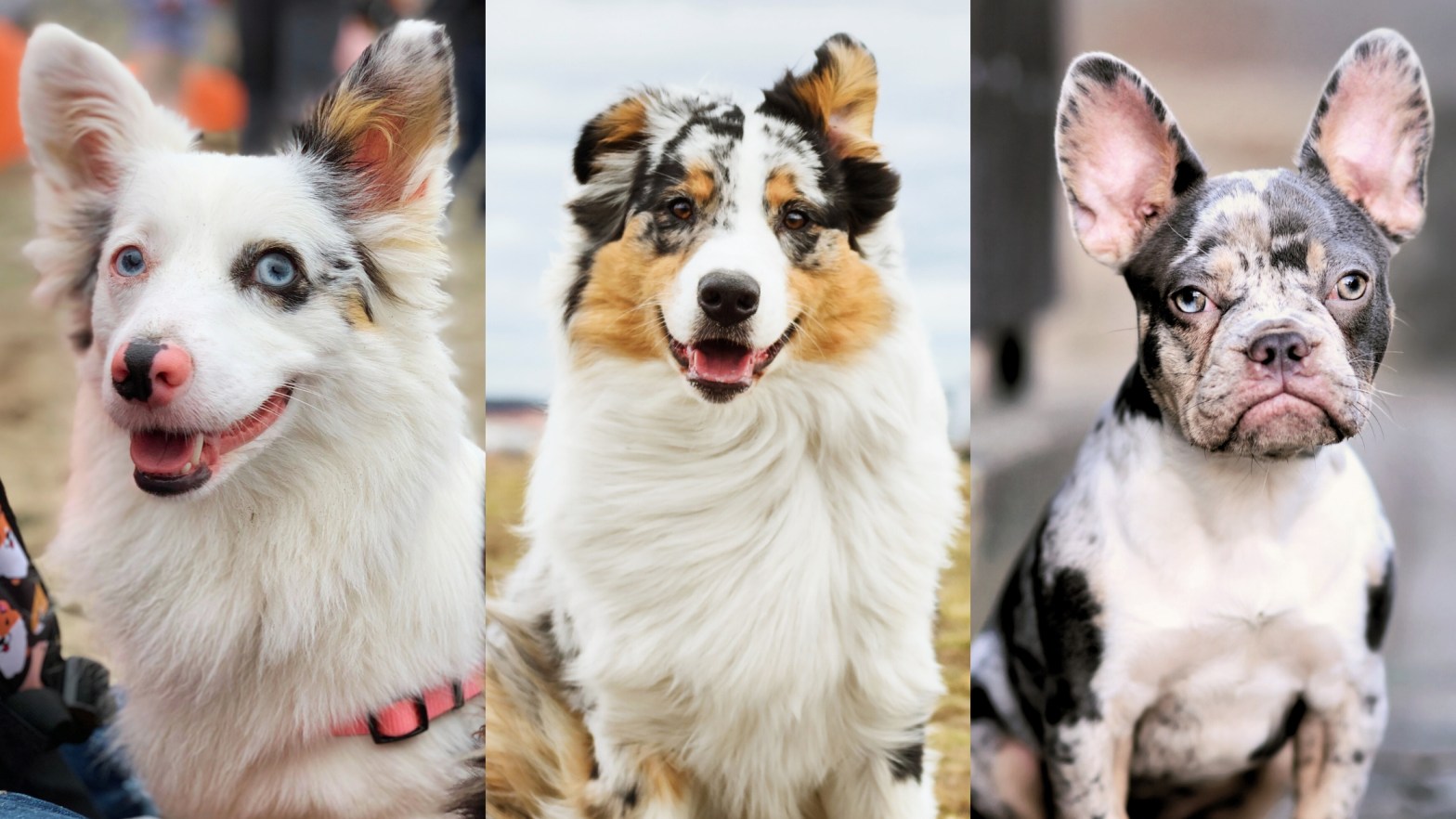
Blue merle is one of the most distinctive coat patterns found in dogs, admired for its stunning, marbled blend of gray, black, and white. This unique color, paired with striking eye colors—often blue or heterochromatic (one blue, one brown)—creates an unforgettable appearance.
Key characteristics of blue merle dogs include:
- Marbled coat patterns: A mix of gray, black, and white, sometimes with tan markings.
- Striking eye colors: Frequently bright blue or heterochromatic.
- Genetic uniqueness: Resulting from the merle gene, which creates their iconic look.
- Breed versatility: Found in herding, companion, and hybrid breeds.
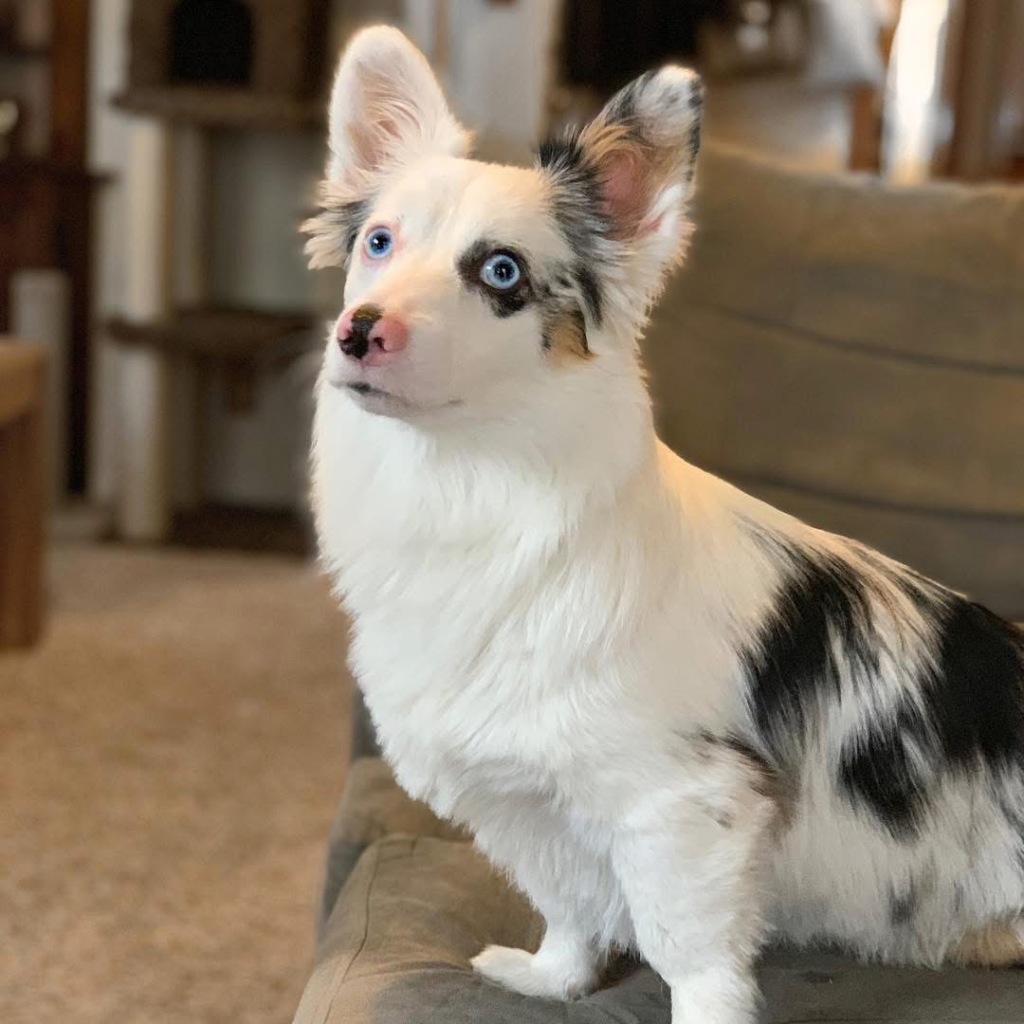
Zira, my Corgi and Australian Shepherd mix, is a stunning example of the blue merle dog color. Her beautifully mottled coat, paired with her lively personality, always turns heads and sparks curiosity.
This blog combines my personal experiences as a blue merle dog owner with insights from scientific research on the merle gene. Join me as we uncover the breeds that showcase this unique pattern!
Blue Merle Genetics
The blue merle dog color is the result of a genetic mutation called the merle gene, which affects how pigment appears in a dog’s coat. This mutation creates a mottled pattern of gray, black, white, and sometimes tan.
According to a study titled Being Merle: The Molecular Genetic Background of the Canine Merle Mutation, the intensity of the blue merle pattern depends on a genetic feature known as a “poly(A) tail.” In this context, “tails” refer to specific DNA sequences that influence how pigment is processed in the coat. Shorter tails allow for normal pigmentation, while longer tails reduce pigmentation, creating lighter areas that form the signature merle pattern.
Blue Merle Health Issues: The Double Merle Risk
Are blue merle dogs healthy? While the colors are captivating, the blue merle gene comes with potential risks when not responsibly managed. For example, when two merle-patterned dogs are bred together, their puppies can inherit two copies of the merle gene, a condition known as “double merle.” Double merle dogs are at a higher risk for serious health issues, including partial or complete deafness and vision impairments.
To ensure the health and well-being of blue merle puppies, responsible breeding practices are essential. Breeders should avoid pairing two merle-patterned dogs to prevent passing on the double merle gene. By understanding the genetics behind the blue merle dog color, owners and breeders can celebrate the beauty of this pattern while safeguarding the health of these special dogs.
Popular Blue Merle Dog Breeds
Blue merle dogs bring more than just their eye-catching coats to the table—they’re often brimming with intelligence, energy, and loyalty. Found across a range of breeds, from tireless herders to affectionate companions, these dogs captivate with their personalities as much as their appearances. Let’s dive into some of the most notable breeds and mixes where the blue merle dog color shines.
Blue Merle Australian Shepherds (Aussies)
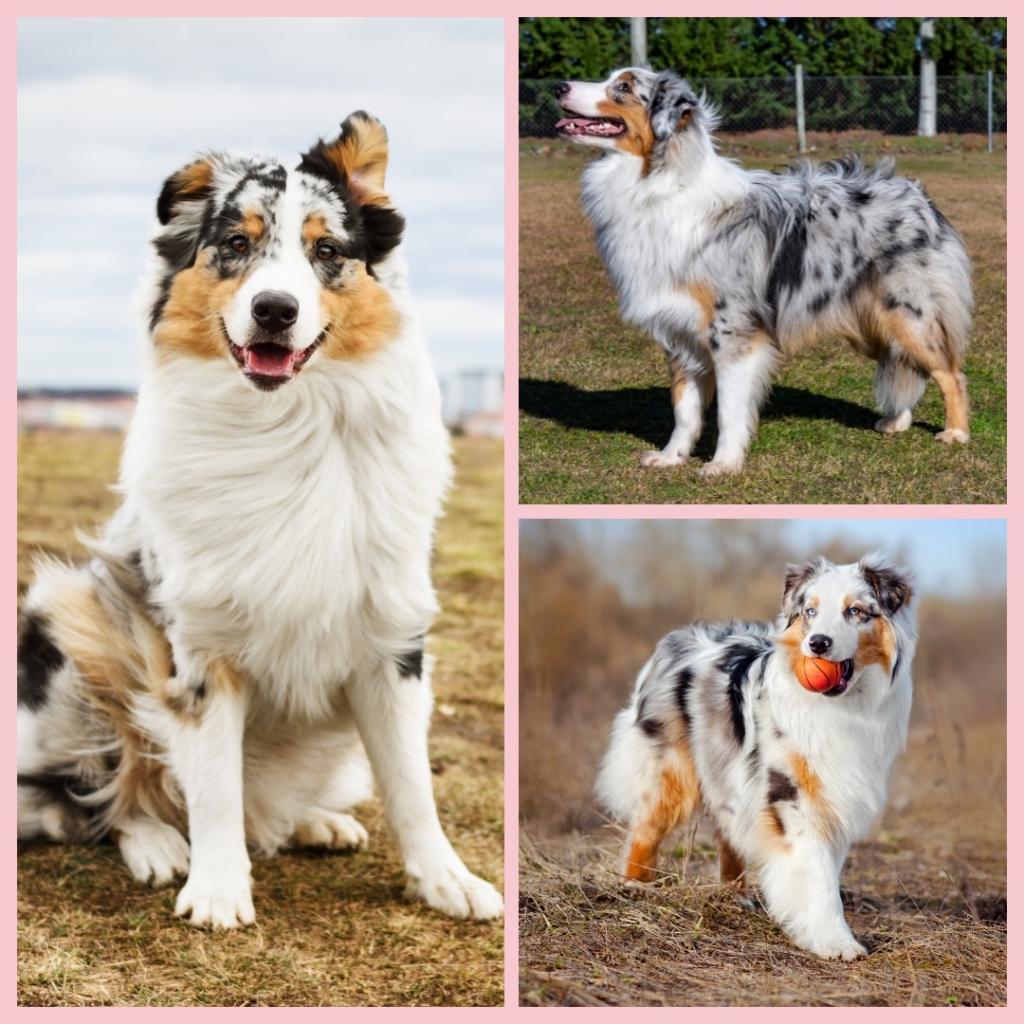
The Australian Shepherd is perhaps the most iconic example of the blue merle dog color. Their boundless energy and sharp instincts make blue merle aussies a favorite among active families and farmers.
Blue Merle Border Collies
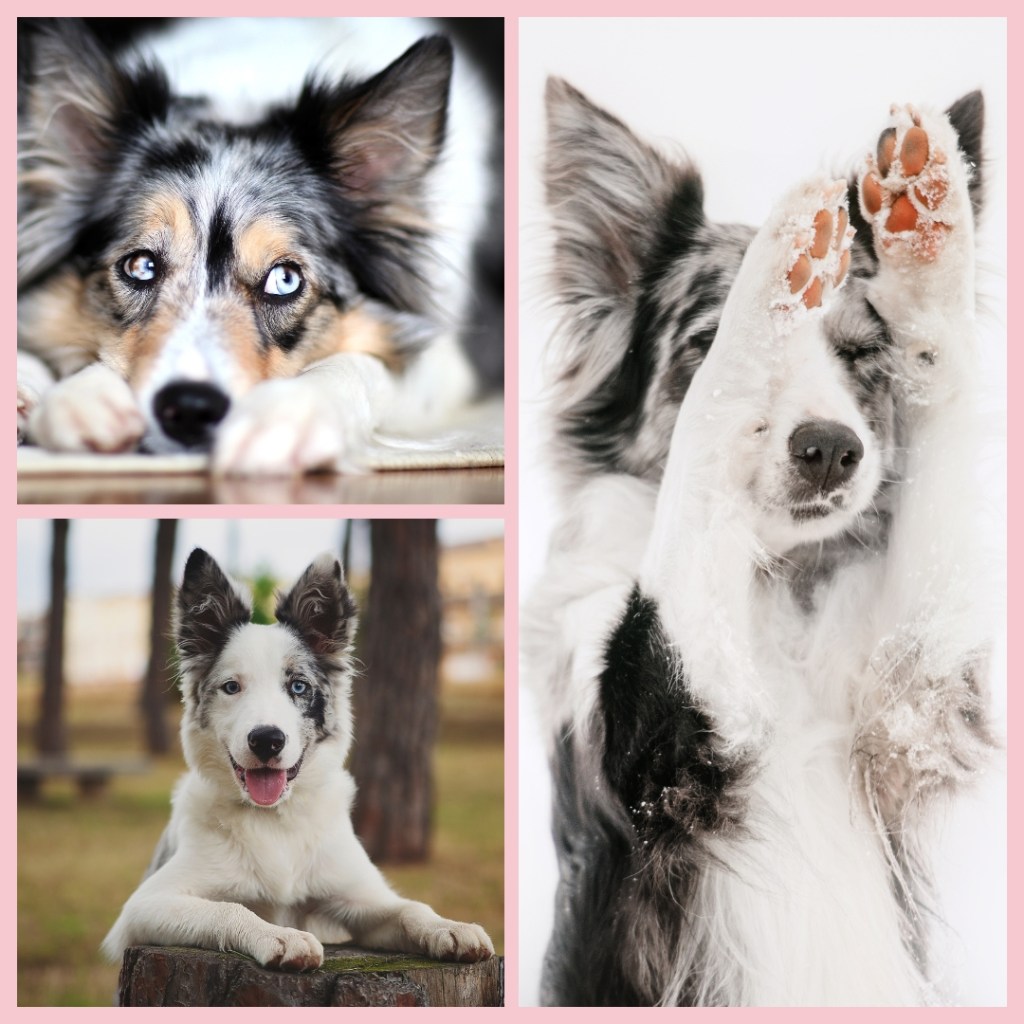
Another highly intelligent and energetic herding breed, the blue merle Border Collie is prized for its athleticism and loyalty. These dogs thrive in active households or with tasks that engage their sharp minds and physical abilities.
Blue Merle Corgis

Are blue merle corgis purebred? It depends on which Corgi breed! While purebred Pembroke Welsh Corgis lack the blue merle gene, Cardigan Welsh Corgis and Corgi mixes can inherit it. Cardigans, known for their longer tails and rounder ears, often come in this stunning variation.
Corgi mixes, like Zira, can also display the blue merle coat depending on the genetics passed down from their parent breeds. These variations blend the charm of Corgis with the unique appeal of the blue merle pattern.
Blue Merle French Bulldogs
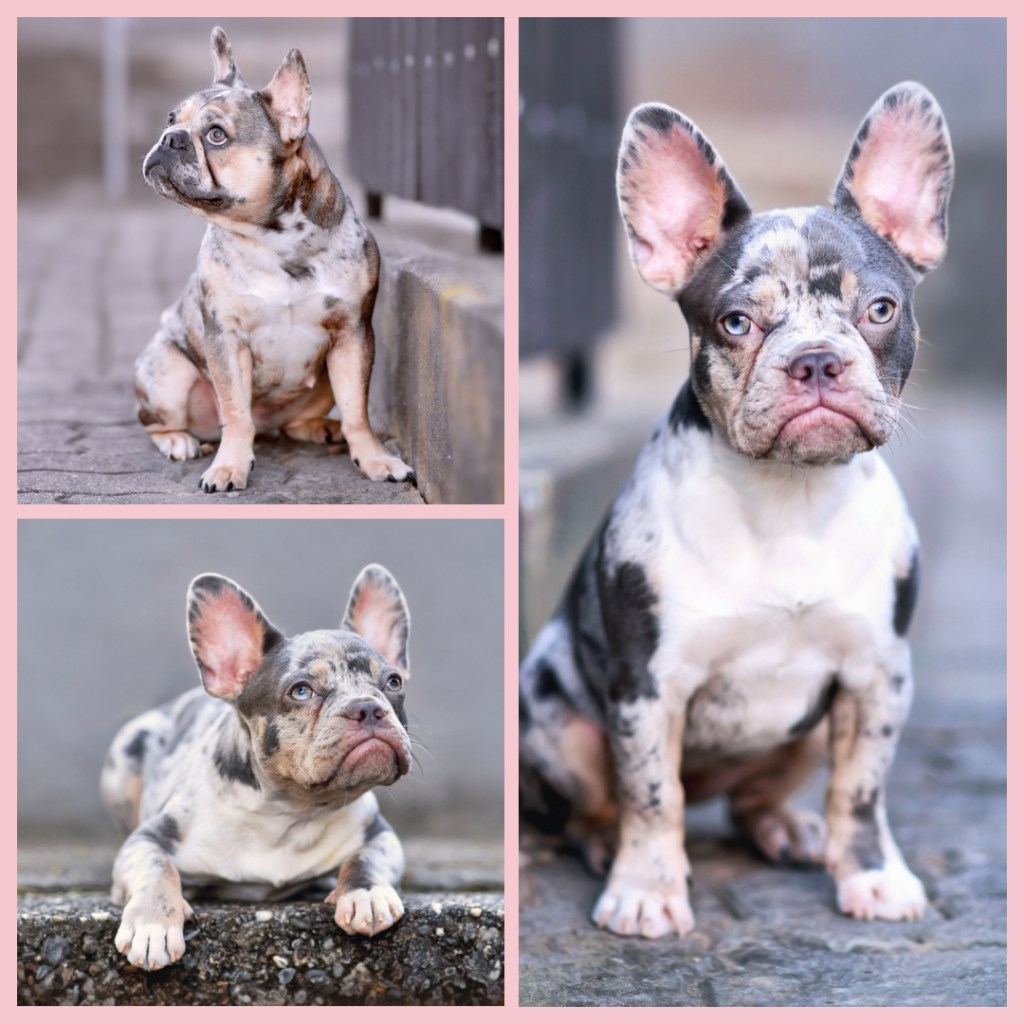
The blue merle Frenchie has risen in popularity for its distinctive coat and charming demeanor. Their adorable appearance and affectionate nature make them highly sought-after companions.
Blue Merle Great Danes

The blue merle Great Dane is a breathtaking giant, combining its imposing size with the striking merle coat. This gentle giant stands out for its looks and affectionate and loyal demeanor, making it a favorite among those who appreciate larger breeds with unique coloring.
Blue Merle or Red Merle: What’s the Difference?

Blue merle and red merle are two variations of the merle coat pattern. While both share the signature marbled look, the primary difference lies in the base coloring.
- Blue merle: Features a mix of gray, black, and white, often with tan markings.
- Red merle: Displays a blend of reddish-brown, cream, and white, creating a warmer appearance.
Both coats are caused by the same merle gene, which modifies pigmentation. The color variations between blue merle vs. red merle depend on the dog’s genetic makeup. Breeds like Australian Shepherds and Border Collies commonly showcase both merle patterns, adding diversity to their appearance.
Blue Merle Nose Colors: What to Expect
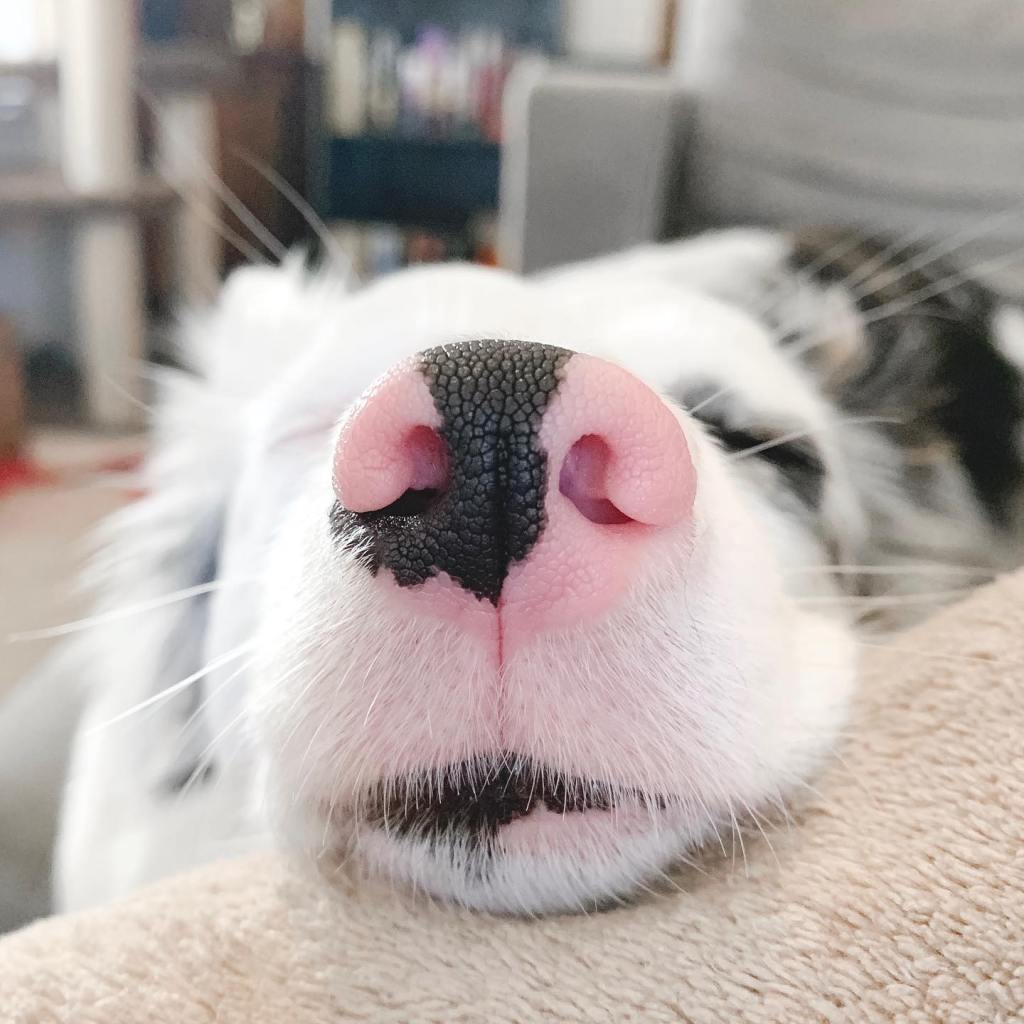
A blue merle dog’s nose color is often as unique as its coat. The most common nose colors include:
- Black: Typically seen in blue merle dogs with darker coat markings.
- Pink or mottled (spotted): Often appears in puppies or dogs with lighter merle coats.
The mottled pink-and-black noses are caused by partial depigmentation linked to the merle gene. While this pattern is a charming trait, it’s essential to protect lighter-colored noses from sunburn with pet-safe sunscreen. To guard Zira’s sensitive nose from harmful UVA/UVB rays, we use the My Dog Nose It – Moisturizing Sun Protection Balm.
Can Cats Have a Blue Merle Pattern?
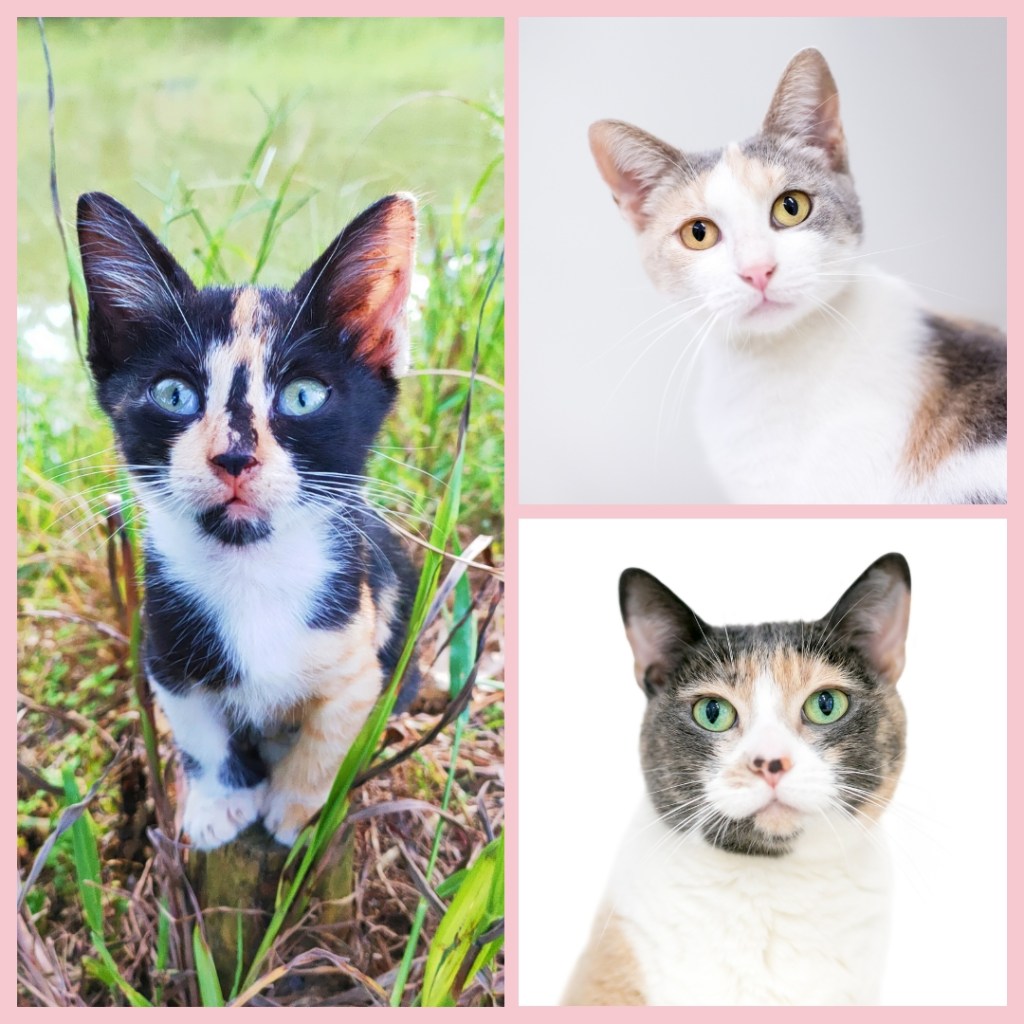
While blue merle is exclusive to dogs, certain cat coat patterns share a similarly mottled appearance. For instance, tortoiseshell or dilute tortoiseshell cats can have marbled coats featuring gray, cream, and black hues. However, this resemblance is purely aesthetic.
In cats, coat patterns result from entirely different genetic mechanisms, so “blue merle cats” don’t technically exist. Nonetheless, the unique coloring of tortoiseshell and dilute cats can mimic the mesmerizing effect of a blue merle dog.
Why Blue Merle Dogs Steal Our Hearts
Blue merle dogs captivate with their marbled coats, enchanting eye colors, and unique charm across a variety of breeds. From energetic Australian Shepherds to lovable Corgi mixes like Zira, these pups are as diverse in personality as they are in appearance. Their mesmerizing beauty, paired with intelligence and individuality, makes blue merle dogs truly unforgettable companions.
If you’re as captivated by blue merle dogs as we are, follow Zira and her companions on their journey:
- Follow Zira the Corgi on TikTok
- Follow Zira the Corgi on Instagram
- Follow Zira the Corgi on Facebook
- Follow Zira the Corgi on YouTube
Join us for fun moments, pet care tips, and a closer look at life with these incredible dogs!
 Zira the Corgi
3 thoughts on “What Is a Blue Merle Dog? Colors, Breeds, and Health Risks”
Comments are closed.